Nickel-containing wastewater is commonly produced by electroplating, surface finishing and metal processing plants. Many facilities find it hard to reduce nickel concentration to meet strict discharge limits, especially when nickel exists in complex forms. Conventional lime precipitation often leaves residual nickel in the treated water, so a reliable nickel ion remover becomes essential for effective nickel wastewater treatment.
Complexing agents in wastewater create stable nickel chelates. Raising pH alone cannot turn these chelated nickel ions into insoluble precipitates. This is the main reason standard hydroxide precipitation fails to remove nickel consistently, and many operators turn to a professional heavy metal precipitant for help.
Lime precipitation is low cost but only works for free nickel ions. Ion exchange provides high removal efficiency yet comes with high investment and frequent maintenance. Heavy metal chelating precipitant is designed for complexed nickel, and stable treatment depends on correct pH control and mixing. These methods are widely used in electroplating wastewater treatment, but each has its own constraints.
Shanmei Environment’s nickel ion remover is a chelating precipitant engineered to capture both free and complexed nickel ions. It reacts with nickel to form insoluble chelate precipitates. The product can be used alongside PAC and PAM to strengthen floc settling.
It reacts with complexed nickel without pre-oxidation in most cases. The reaction process is compact and fits existing sedimentation tanks. Operators can easily control treatment performance through jar tests and on-site monitoring.
It applies to electroplating nickel rinse water, electroless nickel wastewater, metal surface treatment wastewater and printed circuit board washing water.
Run jar tests first with your wastewater sample to confirm working pH and dosage. Add nickel ion remover under stirring, adjust pH, then add flocculants. Let flocs settle and test supernatant nickel content to adjust dosing.
A metal surface treatment plant struggled with residual nickel in effluent after lime treatment. Jar tests were performed using the nickel ion remover. After dosing and mixing, stable precipitates formed. The supernatant nickel concentration reached discharge standards with the existing sedimentation tank.
What pH range works best for the nickel ion remover? The optimal pH varies by water matrix, so jar testing with real samples is recommended. Can it treat other heavy metals? It targets nickel primarily; contact us if your wastewater contains mixed heavy metals.
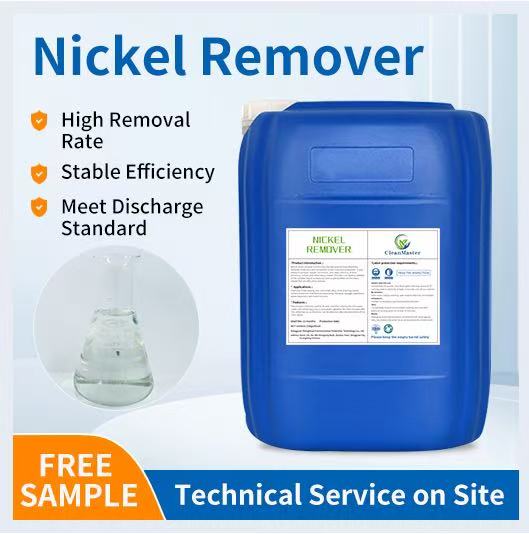
When nickel in wastewater exists as stable complexes, ordinary alkali treatment is insufficient. A professional nickel ion remover can form stable chelate precipitates and help plants achieve compliant effluent. Contact Shanmei Environment to arrange jar tests and custom chemical dosing recommendations. Email: info@san-mei.com
 中文
中文 English