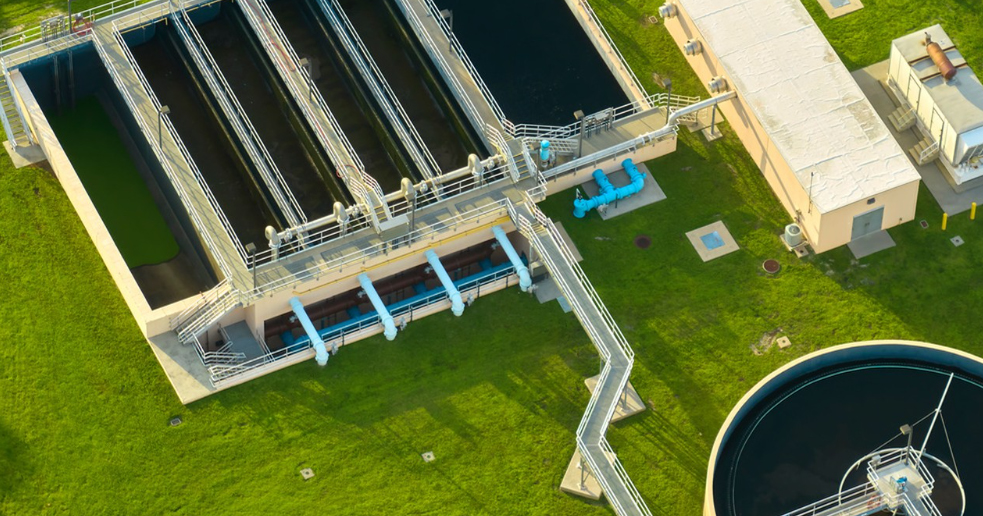
Industrial wastewater from food processing, chemical manufacturing and semiconductor sites often contains high levels of dissolved phosphorus. Many plants struggle to meet increasingly strict discharge limits even after biochemical treatment. Soluble orthophosphate remains in the effluent, which triggers algae growth and water eutrophication in receiving water bodies. In these cases, a reliable phosphate remover becomes a practical solution for stable industrial phosphorus wastewater treatment.
Phosphorus in wastewater mainly exists as orthophosphate, polyphosphate and organic phosphate. Conventional activated sludge processes can only remove part of the phosphorus. Low water temperature, fluctuating flow and hydraulic shock loads reduce biological phosphorus removal performance, leaving residual phosphate in the final effluent.
Several common treatment methods are available, each with clear limits. Biological phosphorus removal is low-cost but sensitive to temperature and organic load, and cannot reach ultra-low phosphorus targets. Membrane filtration can capture suspended solids but cannot remove dissolved phosphate ions, with high operational and maintenance costs. Lime precipitation generates large sludge volumes and requires strict pH adjustment. PAC coagulation works for simple water, yet dosage rises sharply under variable water quality, making stable chemical phosphorus precipitation hard to maintain.
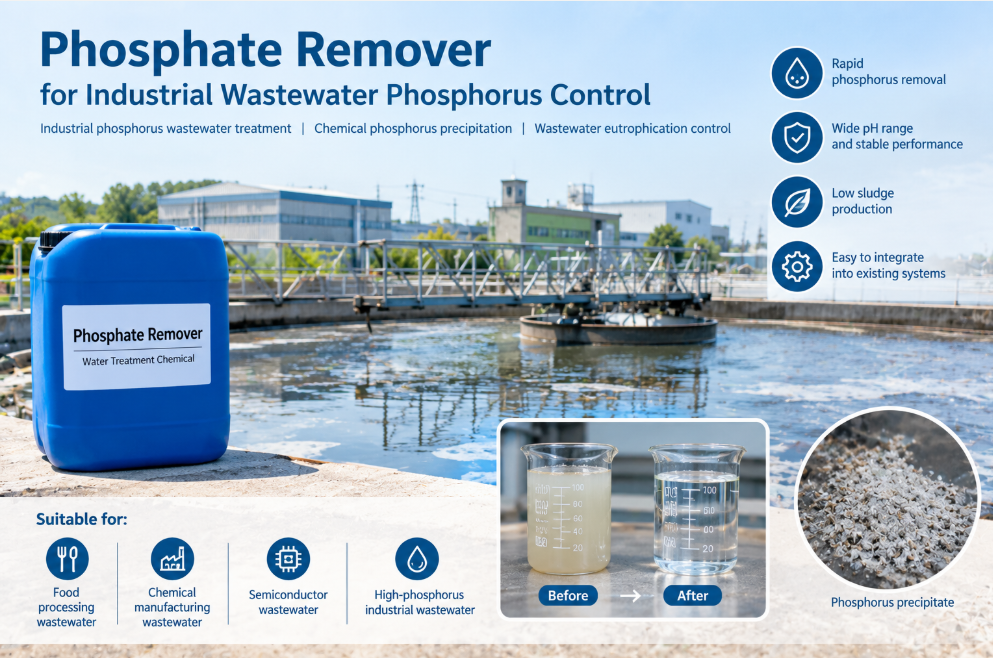
Shanmei Environment’s phosphate remover is a targeted chemical agent designed for phosphorus precipitation. It reacts rapidly with soluble orthophosphate to form stable, insoluble phosphate precipitates. The product can be used together with PAC and PAM to boost floc formation and sedimentation.
This phosphate remover features wide pH adaptability and low sludge production. It can be integrated into existing sedimentation tanks without major equipment upgrades, helping factories cut renovation investment. It does not inhibit microbial activity in upstream biochemical tanks.
Typical applications include food processing wastewater, electroplating rinse water, municipal advanced treatment and semiconductor manufacturing wastewater with high phosphorus loads.
Start with jar tests using on-site wastewater samples to confirm optimal pH and dosage. Add phosphate remover under rapid mixing, then apply flocculants for floc formation. Allow flocs to settle, test supernatant phosphorus concentration and fine-tune dosing according to real-time water quality changes.
A food processing plant faced periodic phosphorus exceedance after biochemical treatment. Increasing PAC dosage only raised sludge output without improving results. Jar tests were carried out with the phosphate remover. After dosing and mixing, phosphate precipitates formed steadily. The plant achieved compliant phosphorus levels in the existing secondary sedimentation tank.
What pH range suits this phosphate remover? Optimal conditions depend on water composition, so jar tests with real samples are recommended. Can it work with existing biochemical systems? Yes, it is compatible with most biochemical and sedimentation processes.
When biochemical treatment fails to hit low phosphorus discharge standards, chemical precipitation with a professional phosphate remover offers a stable way to control phosphorus release and protect receiving water from eutrophication. Contact Shanmei Environment to run jar tests and develop custom dosing strategies. Email: info@san-mei.com
 中文
中文 English